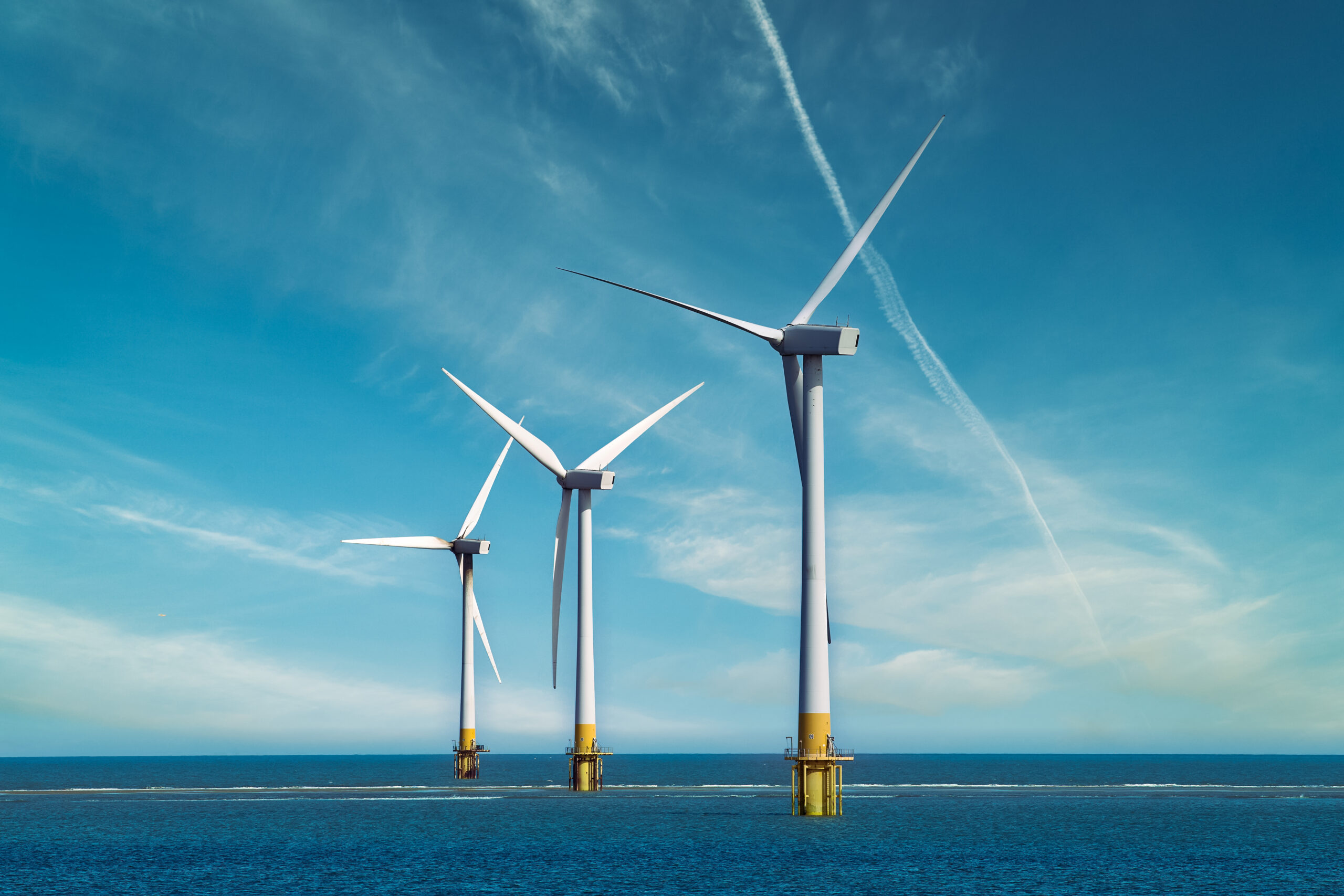
Darren Moore, Applica’s Country Manager for the UK and Europe, explores why the transition from oil and gas to offshore wind is not simply a career move, but a strategic workforce opportunity for the UK energy sector.
By Darren Moore, Country Manager – UK and Europe
Key Takeaways
- The UK wind workforce is growing quickly, with around 55,000 people now working across the sector, including around 40,000 in offshore wind (RenewableUK, 2025).
- The total UK wind workforce could reach more than 112,000 by 2030, increasing demand for experienced technical and project delivery professionals (RenewableUK, 2025).
- Around 90% of skills in the offshore oil and gas workforce are transferable to renewables, hydrogen and CCS, highlighting the value of existing offshore capability (OEUK, 2025).
- Successful transition requires more than transferable skills, it needs role mapping, certification alignment and realistic expectations from clients and candidates.
Why This Conversation Matters Now
The UK’s energy workforce is changing, but the conversation around transition is often too simplistic. Oil and gas has developed a workforce with deep technical capability, strong safety behaviours and proven experience in complex offshore environments. As offshore wind expands, that experience is becoming increasingly relevant. However, moving from oil and gas into offshore wind is not automatic. The skills are often transferable, but project environments, certification requirements and delivery expectations can differ. From Darren’s perspective, the opportunity lies in understanding where capability overlaps, where support is needed and how clients can access this talent without increasing delivery risk.
The Current Reality in the UK Offshore Wind Market
According to RenewableUK, around 55,000 people now work in the UK wind industry, with around 40,000 supporting offshore wind (RenewableUK, 2025). RenewableUK projects that the total UK wind workforce could reach more than 112,000 people by 2030, depending on deployment and delivery scenarios (RenewableUK, 2025). This creates a workforce challenge across engineering, project controls, HSE, QA/QC, construction, commissioning, operations and maintenance. Many of these disciplines already exist within oil and gas.
Key Points
-
Offshore wind is expanding quickly, but workforce growth must keep pace with project delivery (RenewableUK, 2025).
-
Oil and gas workers bring relevant offshore experience across safety, engineering, logistics, inspection and project delivery (OEUK, 2025).
-
Clients that assess capability against the work required, not only sector background, can access a wider talent pool.
Transferable Skills Need Context
One of the strongest arguments for supporting movement from oil and gas into offshore wind is the level of transferable skill already in the market. OEUK’s 2025 Workforce Insight states that around 90% of skills in the offshore oil and gas workforce are transferable to renewables, hydrogen and carbon capture (OEUK, 2025). That means the UK does not need to build offshore wind capability entirely from scratch. There is already a skilled workforce with experience in offshore environments, safety-critical operations and major project execution. However, transferable does not mean identical. A candidate may understand offshore operations but still need sector-specific knowledge around wind farm construction, cable installation, grid connection or operations and maintenance models.
This is where recruitment needs to move beyond keyword matching.
Where Candidates and Clients Can Misjudge the Transition
For candidates, one risk is assuming oil and gas experience automatically transfers without adjustment. The strongest transitions happen when candidates can clearly explain how their experience applies to the role.
Offshore safety experience can support wind project environments, project controls experience can support complex delivery schedules, and QA/QC knowledge can support fabrication, installation and commissioning.
Clients can also miss opportunities by applying overly narrow hiring criteria. If a specification only focuses on previous offshore wind experience, strong candidates from oil and gas may be overlooked before their capability is assessed.
A more effective approach is to separate what is essential from what can be developed. Some requirements are non-negotiable, particularly around safety, certification and technical competence. Others can be developed by candidates who already understand offshore project environments.
Key Points
-
Not every oil and gas professional will be suitable for offshore wind, but many have highly relevant capability (OEUK, 2025).
-
Candidates who can translate their experience clearly are more likely to succeed in the transition.
-
Clients that plan earlier can reduce last-minute hiring pressure and improve workforce continuity.
What This Means for Recruitment Strategies
Transitioning talent from oil and gas to offshore wind requires a more considered recruitment approach.
This means mapping skills against project phase and delivery need, reviewing transferable experience before excluding candidates, identifying training or certification gaps and advising clients on realistic availability and lead times.
Recruitment should help both sides understand how capability can move across sectors without increasing delivery risk.
Looking Ahead
The UK offshore wind sector will continue to need experienced people as projects move through development, construction, commissioning and operations.
Oil and gas will also remain part of the wider energy system. The workforce conversation should not be framed as one sector replacing another. It should be about building an integrated energy workforce that supports multiple technologies and project types.
Closing Reflection
The transition from oil and gas to offshore wind is not a simple switch, but it is a major opportunity.
For candidates, it requires clarity on how their experience applies. For clients, it requires a more open and practical view of transferable capability. For the wider market, it requires earlier planning and realistic conversations about skills.
If you are planning offshore wind projects or looking to understand how oil and gas capability can support your workforce strategy, Applica’s specialist team can help you assess the market, identify transferable skills and build practical resourcing solutions.